Shrimad Bhagvad Gita
The word Bhagavad is derived from Bhagavān, meaning the Supreme Lord or God, while Gita means “song” or “that which is sung.” Thus, Bhagavad Gita is commonly translated as “The Song of God” or “The Divine Song.” The Bhagavad Gita records the direct teachings of Bhagavān Shri Krishna to Arjuna.
The honorific “Shri” is traditionally placed before the name of a person, deity, scripture, sacred place, or other revered entity. It conveys respect, reverence, and auspiciousness and is widely used in both everyday and religious contexts.
“Shrimad” is another honorific expression, traditionally used before the names of revered spiritual teachers, sacred texts, and religious works. Hence, the scripture is traditionally known as the Shrimad Bhagavad Gita.
Shri Krishna is revered in Hindu tradition as an incarnation of Bhagavān Vishnu and, in many Hindu traditions, as the Supreme Personality of Godhead Himself. Hindu scriptures describe numerous incarnations of Vishnu, ten of which are traditionally recognised as the Dashavatara, or ten principal incarnations.
The Bhagavad Gita therefore presents the direct teachings of Shri Krishna as spoken to Arjuna, and hence the name Bhagavad Gita — “The Song of God.”
The Mahabharata tells the story of a devastating conflict between two branches of the Kuru dynasty—the Pandavas and the Kauravas. Their long-standing dispute over the kingdom could not be resolved peacefully, and both sides eventually assembled their armies at Kurukshetra, seeking the support of kings and warriors from across the land.
The honorific “Shri” is traditionally placed before the name of a person, deity, scripture, sacred place, or other revered entity. It conveys respect, reverence, and auspiciousness and is widely used in both everyday and religious contexts.
“Shrimad” is another honorific expression, traditionally used before the names of revered spiritual teachers, sacred texts, and religious works. Hence, the scripture is traditionally known as the Shrimad Bhagavad Gita.
The Bhagavad Gita within the Mahabharata
The Shrimad Bhagavad Gita is part of the great Sanskrit epic, the Mahabharata. It appears in the Bhishma Parva, in Chapters 25–42 according to the commonly followed chapter numbering. These eighteen chapters contain the profound dialogue between Bhagavān Shri Krishna and Arjuna, spoken immediately before the great war of Kurukshetra.Shri Krishna is revered in Hindu tradition as an incarnation of Bhagavān Vishnu and, in many Hindu traditions, as the Supreme Personality of Godhead Himself. Hindu scriptures describe numerous incarnations of Vishnu, ten of which are traditionally recognised as the Dashavatara, or ten principal incarnations.
The Bhagavad Gita therefore presents the direct teachings of Shri Krishna as spoken to Arjuna, and hence the name Bhagavad Gita — “The Song of God.”
The Battlefield of Kurukshetra
The Shrimad Bhagavad Gita was revealed on the battlefield of Kurukshetra, immediately before the great war described in the Mahabharata.The Mahabharata tells the story of a devastating conflict between two branches of the Kuru dynasty—the Pandavas and the Kauravas. Their long-standing dispute over the kingdom could not be resolved peacefully, and both sides eventually assembled their armies at Kurukshetra, seeking the support of kings and warriors from across the land.
At that time, Shri Krishna was the ruler of Dvaraka. Both the Pandavas and the Kauravas approached Him seeking His support. Shri Krishna offered them a choice: one side could have His entire army, while the other could have Him alone. He also made it clear that He would not take up weapons or personally fight in the war.
Arjuna, a devoted follower of Shri Krishna, chose Shri Krishna Himself and requested Him to become his charioteer and guide. Duryodhana, representing the Kaurava side, chose Shri Krishna's army.
Thus, Shri Krishna became Arjuna's charioteer, while the armies of the Pandavas and Kauravas assembled on opposite sides of the battlefield.
Arjuna, a devoted follower of Shri Krishna, chose Shri Krishna Himself and requested Him to become his charioteer and guide. Duryodhana, representing the Kaurava side, chose Shri Krishna's army.
Thus, Shri Krishna became Arjuna's charioteer, while the armies of the Pandavas and Kauravas assembled on opposite sides of the battlefield.
Arjuna's Dilemma
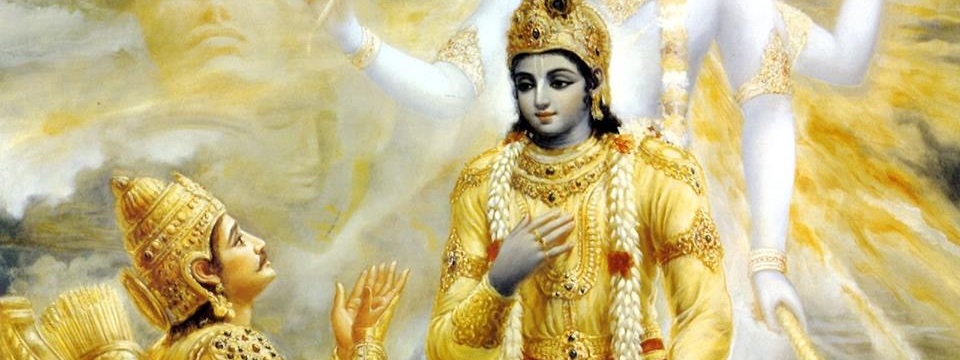
Just before the battle was to begin, Arjuna asked Shri Krishna to place his chariot between the two armies so that he could see those assembled to fight.
When Arjuna looked across the battlefield, however, he did not see merely opposing soldiers. He saw people he loved and respected—his grandfather Bhishma, his teacher Dronacharya, relatives, friends, and many others known to him.
Overcome with grief and confusion, Arjuna could no longer understand what was right. How could he fight and kill those he loved and respected merely to gain a kingdom? Was victory worth the destruction of his own family and loved ones?
His strength and resolve began to fail. He laid down his weapons and turned to Shri Krishna for guidance.
It was at this moment that the Bhagavad Gita began.
When Arjuna looked across the battlefield, however, he did not see merely opposing soldiers. He saw people he loved and respected—his grandfather Bhishma, his teacher Dronacharya, relatives, friends, and many others known to him.
Overcome with grief and confusion, Arjuna could no longer understand what was right. How could he fight and kill those he loved and respected merely to gain a kingdom? Was victory worth the destruction of his own family and loved ones?
His strength and resolve began to fail. He laid down his weapons and turned to Shri Krishna for guidance.
It was at this moment that the Bhagavad Gita began.
The Teachings of Shri Krishna
Shri Krishna responded to Arjuna's questions by revealing profound truths about life, the self, death, the afterlife, duty, action, knowledge, devotion, liberation, and the nature of the Supreme.
The dialogue explores some of the deepest questions of human existence:
Who are we? What is the purpose of human life? What happens after death? What is our duty? How should we act? What is the nature of God? What is the relationship between the individual soul and the Supreme? And how can one attain liberation?
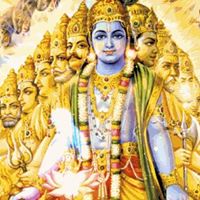
As the dialogue progresses, Shri Krishna reveals His divine nature to Arjuna. Although Arjuna already regarded Krishna as his guide and Lord, he wished to behold His true universal form.
In response to Arjuna's request, Shri Krishna revealed the Vishvarupa, His magnificent Universal Form—a vision of the Divine in which the entire universe and all beings could be perceived within Him.
The Bhagavad Gita therefore presents not merely a philosophical discourse, but a direct spiritual dialogue between the individual seeker and the Divine.
The Bhagavad Gita occupies a unique place among Hindu scriptures because it presents a direct dialogue in which Shri Krishna reveals His divine nature and teaches Arjuna about the deepest questions of existence.
The dialogue explores some of the deepest questions of human existence:
Who are we? What is the purpose of human life? What happens after death? What is our duty? How should we act? What is the nature of God? What is the relationship between the individual soul and the Supreme? And how can one attain liberation?
As the dialogue progresses, Shri Krishna reveals His divine nature to Arjuna. Although Arjuna already regarded Krishna as his guide and Lord, he wished to behold His true universal form.
In response to Arjuna's request, Shri Krishna revealed the Vishvarupa, His magnificent Universal Form—a vision of the Divine in which the entire universe and all beings could be perceived within Him.
The Bhagavad Gita therefore presents not merely a philosophical discourse, but a direct spiritual dialogue between the individual seeker and the Divine.
The Bhagavad Gita occupies a unique place among Hindu scriptures because it presents a direct dialogue in which Shri Krishna reveals His divine nature and teaches Arjuna about the deepest questions of existence.
The Song of God
The Shrimad Bhagavad Gita contains profound spiritual teachings and layers of meaning that have inspired saints, sages, philosophers, and seekers for centuries. Its verses continue to be studied and contemplated, revealing deeper insights according to the understanding and spiritual journey of the seeker.
The teachings of the Gita address the eternal nature of the soul, the law of karma, the paths of knowledge and devotion, the nature of consciousness, the purpose of human existence, and the ultimate reality.
The Shrimad Bhagavad Gita is therefore not merely a book to be read. It is an invitation to question, reflect, understand, and transform oneself.
The Bhagavad Gita is a journey from confusion to clarity, from attachment to wisdom, and ultimately from the knowledge of the self to the realisation of the Divine.
Hare Krishna!!!
The Shrimad Bhagavad Gita is therefore not merely a book to be read. It is an invitation to question, reflect, understand, and transform oneself.
The Bhagavad Gita is a journey from confusion to clarity, from attachment to wisdom, and ultimately from the knowledge of the self to the realisation of the Divine.
Hare Krishna!!!